Signs of the Times: 69 Innocent British Place Names That Keep Us Sniggering
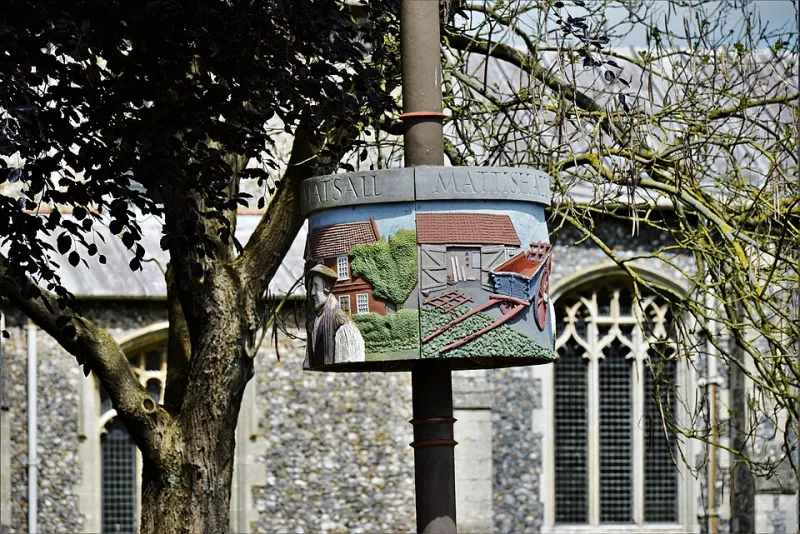
Photo: Michael Garlick , CC BY-SA 2.0, via Wikimedia Commons
A nation that sniggers at the signpost
Britain has never been shy of a double entendre, but it saves its straightest face for the map. In 2026, the satnav still pronounces these names with total innocence while the driver dissolves into a 12-year-old. Number 69 has no intention of pretending otherwise. This is not a smear campaign against the good people of Bell End or Pratt's Bottom. It is a defence of the harmless, communal snigger — the one bit of folk culture that survives every motorway service station.
The rules of engagement are simple. Laugh in the car, not in the village hall. Photograph the sign, then buy something from the nearest pub. And remember that almost every name here began as something dull: a personal name, a stream, a hill, a field boundary or a Viking's paperwork. The filth is entirely our own work.
The first fifteen, fully explained
- Bell End — one of several; likely a bell-shaped field or boundary marker, not an anatomical review.
- Cockfosters — Old English personal name Cocc plus a foresters' clearing; the London suburb is innocent, the giggling is not.
- Penistone — recorded as Penigeston, probably Penning's farm; South Yorkshire's stone has heard every joke.
- Shitterton — Dorset; from Old English scitere, a brook or ditch, plus tun, farm. The water did it.
- Crapstone — Devon; likely a crest or crop by a stone. Domesday-adjacent, lavatory-adjacent only in sound.
- Pratt's Bottom — a family name plus a valley bottom; no comment on the Pratts.
- Lickey End — the end of the Lickey Hills; end is a boundary, not an invitation.
- Muff — County Donegal; from Irish magh, a plain. Northern Ireland's most misunderstood village.
- Twatt — Orkney and Shetland; Old Norse þveit, a small parcel of land. Viking paperwork, basically.
- Fingringhoe — Essex; the Fingringas people plus hoh, a spur of land.
- Wetwang — East Yorkshire; Old Norse for wet field. The name is damp, not saucy.
- Bitchfield — Lincolnshire; Bicca's open land. Bicca was a person, not a mood.
- Ugley — Essex; Ugga's woodland clearing. The village has a church, a pub and no shame.
- Cockermouth — Cumbria; the mouth of the River Cocker. The river got there first.
- Titsey — Surrey; Ticce's island or clearing. A small place with a large snigger radius.
The remaining fifty-four, briskly
- Great Cockup — a fell name from Old Norse, probably a hill with a cock-shaped ridge; no anatomy.
- Little Cockup — same hill, smaller; the joke is bigger.
- Brown Willy — Cornwall; Cornish bronn, hill, plus a willow or swallow element. Nothing to do with anyone's Willy.
- Slaggyford — Northumberland; Old Norse slakki, hollow, plus ford.
- Scunthorpe — Skuma's farm; the infamous substring is pure coincidence.
- Nether Wallop — Hampshire; waella, stream. The wallop is water.
- Middle Wallop — same stream, middle position.
- Over Wallop — same stream, upper position.
- Little Willey — Shropshire; wilig, willow.
- Willey — willow clearing; the double entendre is a later arrival.
- Ramsbottom — a ram's valley bottom; livestock, not lechery.
- Cockshutt — Shropshire; woodcock thicket.
- Clitheroe — Lancashire; Old English clif and hoh, a hill spur.
- Nob End — a knob-shaped hill or field edge.
- Nobottle — Northamptonshire; Hnott's dwelling.
- River Piddle — Dorset; pidele, a marsh stream.
- Piddletrenthide — the Piddle settlement with thirty hides.
- Piddlehinton — the Piddle settlement belonging to Hinton.
- Staines — Surrey; Old English stan, stone.
- Thong — Kent; thwang, a narrow strip of land.
- Trumpington — Cambridgeshire; Trumpa's farm.
- Wookey Hole — Somerset; wocig, a snare or cave.
- Cumwhitton — Cumbria; Brittonic cwm, valley, plus Whitton.
- Cumdivock — valley of the Divock.
- Cummersdale — valley farm.
- Cumrew — valley of the yew.
- Cumwhinton — valley of Whinton.
- Cocking — West Sussex; Cocca's people.
- Cockley Cley — Norfolk; Cocca's clearing by clay.
- Cockington — Devon; Cocca's farm.
- Cocks — Cornwall; likely a hillock or cockerel place.
- Balls Cross — West Sussex; the Ball family's crossroads.
- Balls Green — a green associated with a Ball family.
- Cocklake — Somerset; cockerel or woodcock by a stream.
- Cockwood — Devon; woodcock wood.
- Cockwells — Cornwall; Cocca's spring.
- Cockroad — South Gloucestershire; a road named for cocks or a cock inn.
- Cockyard — Herefordshire; an enclosed yard, probably for poultry.
- Cock Bevington — Warwickshire; Bevington's settlement with a cock place-name.
- Cock Green — Essex; green by a cock pit or cock inn.
- Prickwillow — Cambridgeshire; willow cutting ground, not a personal review.
- Tosside — North Yorkshire; Tossi's hillside.
- Tarty — Aberdeenshire; a Gaelic-derived name, no relation to tartiness.
- Stiff Street — Kent; a stiff climb.
- Titty Hill — West Sussex; a hill name, probably from a personal name or bird.
- Tittleshall — Norfolk; Tytel's hall.
- Tittensor — Staffordshire; Titten's hill or enclosure.
- Titlington — Northumberland; Titling's farm.
- Splatt — Cornwall; a patch or strip of land.
- Winkleigh — Devon; Wincel's woodland clearing.
- Wombwell — South Yorkshire; Womba's spring.
- Cock Hill — one of many; a hill named for cocks or a cock-shaped ridge.
- Cock Bank — a bank or slope with the same poultry or landform root.
- Cock Lane — London and elsewhere; a lane named for cock-fighting, poultry or a cock inn.
The gentle defence of the signpost snigger
The joke is not really about sex. It is about the gap between what a name meant to a medieval farmer and what it means to a bored passenger with a camera phone. British place-name humour is a rare democratic pleasure: free, portable and available on any A-road. It also has a useful civic function. Anyone who has driven past a sign for Titsey and resisted the urge to comment deserves a medal, or at least a quiet pint.
So photograph the sign, chuckle, and move on. The village has heard it before, probably from someone in a Vauxhall Corsa in 1998. The etymology is the punchline's alibi, and the map remains gloriously, innocently filthy.