Cabinet of Curiosities, Queue of Six: Britain's Tiny Museums Are Quietly Winning 2026
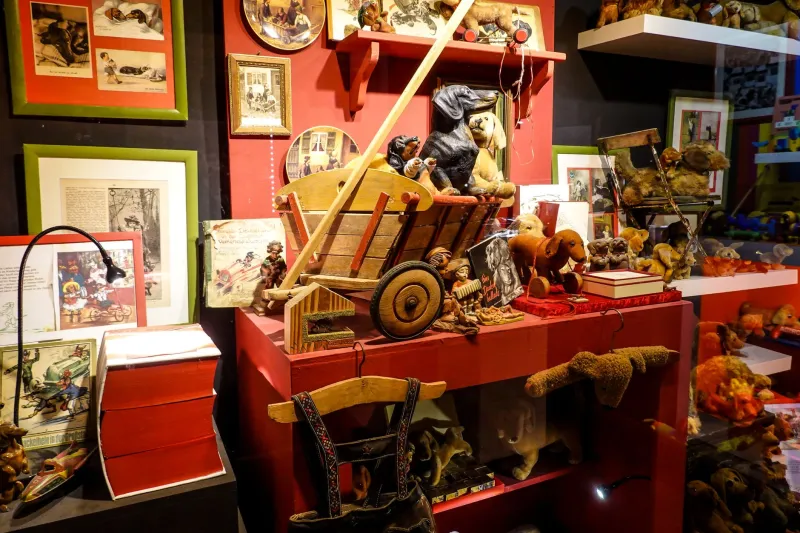
Somewhere between the blockbuster exhibition and the gift shop, Britain has developed a new appetite: the museum small enough to fit into a sentence. In 2026, the cultural mood is less 'major retrospective' and more 'why is there a museum of lawnmowers, and why am I booking a train?' It is a strange little revolution, and it smells faintly of polish, old paper and damp Somerset stone.
The big museums will always have their place. But there is a particular pleasure in a collection so specific that it becomes a personality test. A room full of dog collars. A temple to the pencil. A coastal cupboard of witchcraft. These places do not ask you to be impressed. They ask you to lean in.
The pleasure of the absurdly specific
Hyper-specific museums are winning in 2026 for reasons that are equal parts economic and emotional. They are usually cheap. They are human-scale. They can be done in an afternoon without a timed ticket, an audio guide or the nagging feeling that you are failing to appreciate a Van Gogh. And they give you a story — not the story of a civilisation, but the story of one odd, stubborn obsession.
Britain has always been a nation of amateur archivists with a shed and a labelling gun. We are the country that will preserve a Victorian mangle because it has a good story, then put a laminated sign next to it explaining exactly which vicar owned it. The niche museum is simply that instinct with a visitor centre and a slightly overpriced postcard rack.
There is also the anti-algorithm appeal. In an age of AI-generated everything, a room full of actual dog collars feels radical. You cannot scroll through it. You have to stand there, in real life, wondering who decided that a spiked medieval collar was the last word in canine glamour. It is culture as curiosity, not content.
Six little museums worth the pilgrimage in 2026
1. British Lawnmower Museum, Southport. A temple to the mowing machine, complete with celebrity lawnmowers and the kind of devotion that makes you look at your own garden with new shame. It is gloriously unnecessary and therefore essential.
2. Museum of Witchcraft and Magic, Boscastle. Dark, coastal and weirdly cosy, this is not just broomsticks and pointy hats. It is folklore, cunning folk, charms and the uneasy history of belief. You leave feeling slightly watched by a hedge.
3. Dog Collar Museum, Leeds Castle, Kent. Hundreds of collars in a small space, from medieval spikes to polite pearls. It is the kind of place that makes you realise how much human personality we project onto animals — and how much bling a spaniel can historically carry.
4. Derwent Pencil Museum, Keswick. Pencil history, graphite lore and a giant pencil that raises more questions than it answers. The gift shop is dangerously specific. You will come out owning a pencil you did not know you needed.
5. The Fan Museum, Greenwich. Hand fans, tiny painted worlds and the social history of keeping cool before air conditioning. It is delicate, surprising and exactly the sort of place where you learn something you will repeat at dinner for years.
6. Bakelite Museum, Williton, Somerset. Early plastics, radios, telephones and the strange beauty of a material that was once the future. Check opening times before you go full pilgrim — small museums have a habit of being gloriously, maddeningly part-time.
Why they are winning in 2026
Because they offer something the blockbuster cannot: permission to be delighted by something small. A hyper-specific museum is not trying to be everything. It is trying to be one thing extremely well, and then put a kettle on. In 2026, that feels like a radical act of focus.
They also suit the way we travel now. Weekends are shorter, budgets are tighter, and the internet has made every town a potential day trip. A museum that takes 45 minutes but gives you a decade of anecdotes is excellent value. It is also brilliant for the towns that host them: a reason to get off the train, buy a coffee, and wander somewhere you would otherwise pass through.
And there is a quieter appeal. These places preserve ordinary life. Not kings and battles, but pencils, fans, collars, lawnmowers and plastic radios. They are the attic of the nation, curated by obsessives, volunteers and families who decided that the everyday deserved a label.
A defence of Britain's oddest cultural treasures
It would be easy to treat these museums as a joke. That would be a mistake. The joke is not that someone cares about lawnmowers. The joke is that we ever thought caring was embarrassing. Britain's oddest museums are not ironic; they are sincere. They are run by people who know more about their subject than any reasonable person should, and who are delighted to tell you why.
They are also vulnerable. Small museums face funding gaps, damp, lease renewals and the constant risk that a generation of volunteers will retire before anyone thinks to ask them what the laminated sign means. Visiting them is not just a quirky day out. It is a small act of cultural maintenance.
So in 2026, give the blockbuster a miss one rainy Saturday. Go and stand in a room full of dog collars. Buy the postcard. Tell a friend. Number 69 has always believed the best bits of Britain are the ones that do not shout — and the tiniest museums are shouting very quietly indeed.